Democracy & Election Integrity Scholar · Practitioner

Natia
Mezvrishvili

Electoral Authoritarianism  ·  Democratic Resilience  ·  Opposition Strategies
Criminal Justice & Human Rights Reforms

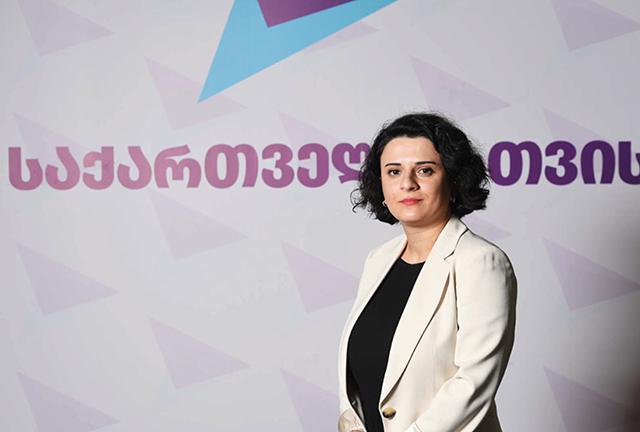
Natia Mezvrishvili is a scholar-practitioner working at the intersection of electoral authoritarianism, democratic resilience, and opposition strategy. Her research asks whether democratic actors — political opposition, civil society, and independent media — can effectively challenge autocratic incumbents through elections, and under what conditions. The question is grounded in twenty years of direct experience: as a senior government official who helped build Georgia's democratic institutions, and as an opposition leader who later fought to defend them.

Natia Mezvrishvili
Visiting Scholar George Washington University, Elliott School of International Affairs
Former: Head of PM's Office, Vice-Minister of Interior
About

Practitioner Foundation

The practitioner record that grounds this research is not background it is the analytical foundation. Twenty years inside Georgian institutions produced knowledge that desk-based scholarship cannot replicate: not just how systems work in principle, but how they fail, and how mechanisms built to prevent abuse are repurposed to enable it.

Natia Mezvrishvili is a Visiting Scholar at George Washington University's Elliott School of International Affairs and a Community of Practice Member at Cornell's Brooks Center on Global Democracy. She holds an LL.M. with honors from the University of Cincinnati College of Law and graduate and undergraduate degrees from Tbilisi State University. She is a member of the American and Georgian Bar Associations.

Her government career spanned the most consequential decade of Georgia's democratic reform process. As Vice Minister of Internal Affairs, Head of the Government Administration, Chief of Staff to the Prime Minister, and a senior prosecutor, she led institutional and legislative reform across criminal justice, juvenile justice, and human rights — work associated with the modernization of the Prosecution Service, the Criminal Police, and the establishment of a centralized human rights protection mechanism.

When Georgia's democratic trajectory reversed, she moved into opposition. As Vice Chair of the political party For Georgia and head of its Election Task Force, she directed fraud documentation operations during the 2021 municipal and 2024 parliamentary elections — coordinating with international observation organizations and developing real-time counter-strategies under operational pressure. She simultaneously led the party's Democracy and Rule of Law platform, resisting the dismantling of reforms she had spent a decade building.

Her academic career runs parallel: over a decade of teaching criminal law, criminal procedure, trial advocacy, and juvenile justice at six Georgian universities and professional training institutions, including Tbilisi State University and the Police Academy. She has authored widely used legal texts and led civic education initiatives on democracy, human rights, and electoral integrity.

01 Research

The central question Mezvrishvili's work addresses is whether democratic actors - political opposition, civil society, and independent media - can effectively challenge autocratic incumbents through elections under electoral authoritarianism and under what conditions.

The scholarship on electoral authoritarianism has produced rich accounts of incumbents' manipulation strategies. The opposition side of the equation - the strategic choices, coordination failures, and conditions under which democratic actors prevail - remains far less theorized. Mezvrishvili's research addresses that gap through the lens of Georgia (2024) in comparative perspective with Hungary (2026), Poland (2023), Serbia (2022–2024), Turkey (2024), Belarus (2020), and Venezuela (2024), cases selected to reflect variation in strategic outcomes across different points on the authoritarian spectrum.

The study advances the following arguments: defeating or weakening an autocratic incumbent through elections is possible even in a deteriorated electoral environment, provided democratic actors develop counter-strategies aligned with authoritarian tactics; participation rather than boycott, when paired with effective strategic choices, can generate electoral pressure, expose regime illegitimacy, and create conditions for political transition; Effective resistance requires sustained investment in vote protection and fraud exposure infrastructure across all three electoral phases - pre-election, election day, and post-election - as modern incumbents increasingly rely on pre-electoral, systemic manipulation that makes direct evidence of fraud difficult to obtain and contest.

Arguments are grounded in comparative analysis and direct practitioner experience. The author contributed to electoral integrity mechanisms as Vice Chair of the Interagency Council while in government, and subsequently led the opposition party For Georgia's Election Task Force during the 2021 municipal and 2024 parliamentary elections, overseeing real-time fraud documentation and coordinating with international observation organizations.

Georgia as a Case Study Asset

Georgia occupies a theoretically distinctive position within the comparative set. Unlike Hungary — where authoritarianism was still being consolidated — Georgia by 2024 had already undergone a more advanced authoritarian turn, making the opposition's strategic challenge substantially harder. Yet unlike Belarus and Venezuela, Georgia retained civic space ahead of the 2024 parliamentary elections. This places Georgia at a precise point on the authoritarian spectrum where structural constraints were severe but not yet determinative - where, under the right strategic choices, a political transition through elections remained a realistic possibility.

03 Publications
Books & Manuals
2017
Investigation Methodology Manual
Chapter on investigative activities. European Union.
2015
Commentary on the Criminal Procedure Code of Georgia
Chapter on investigative activities. American Bar Association.
Articles & Essays
2024
Lessons from Georgia's Democratic U-Turn: Preventing Authoritarian Entrenchment
Democracy Without Exception, Substack.
Read →
Manuscripts & Works in Progress
2025
Countering the Rise of Electoral Authoritarianism: Insights from Georgia
Unpublished manuscript. Comparative perspective with Hungary, Serbia, Poland, Belarus, Venezuela, Turkey.
How Democratic Opposition Can Win Elections in Authoritarian Contexts In Progress
Explores strategies available to democratic opposition actors tailored to the mechanisms of control and manipulation employed by electoral authoritarian regimes.
Vote Protection and Electoral Fraud Exposure Mechanisms in Authoritarian Elections In Progress
Explores vote protection and electoral fraud exposure mechanisms designed to address the techniques of electoral manipulation used by electoral authoritarian incumbents.
The Transformation of Illiberalism: From Ideology Into an Instrument of Electoral Authoritarianism In Progress
Explores how Viktor Orban's concept of illiberalism was adapted and deployed by Georgia's ruling authorities as a tool for consolidating electoral authoritarian rule.
Selected Policy Papers
2024
Roadmap on How to Bring Georgia Back on a Democratic, European, and Euro-Atlantic Track and Build Consensus Democracy The Role of Free and Fair Elections
Political Party "For Georgia" · Author
2021
Concept Paper on Criminal Justice Reform in Georgia
UN Office of the High Commissioner for Human Rights (OHCHR) · Author
2020
10-Year National Human Rights Strategy of Georgia
Government of Georgia · Lead Coordinator
2018
Concept Paper on Criminal Police Reform
Ministry of Internal Affairs of Georgia · Author
2017
Prosecutor's Office of Georgia 10-Year Strategic Development Plan
General Prosecutor's Office of Georgia · Lead Author
04 Media Appearances

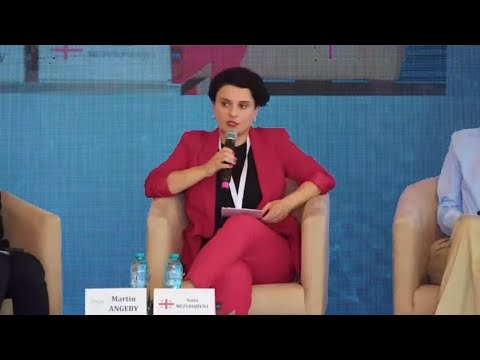
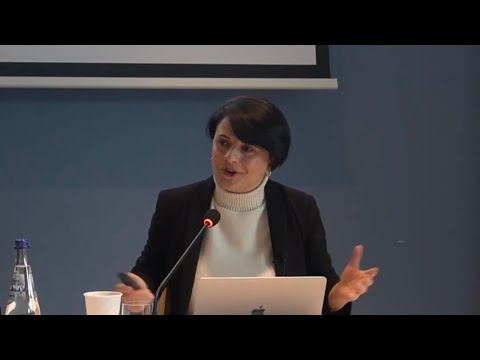
Interviews, commentary, and public appearances on Georgian democracy, electoral authoritarianism, and opposition strategy.

05 Teaching

Criminal law, criminal procedure, trial skills, legal writing, juvenile justice, and ECHR standards taught across six Georgian universities and professional training institutions between 2010 and 2022, including Iv. Javakhishvili Tbilisi State University, Caucasus University, East European University, Ilia State University, the Training Center of Justice, and the Police Academy. The sustained engagement with both academic and practitioner audiences active prosecutors, investigators, police officers developed a capacity to translate institutional and legal analysis into frameworks that practitioners actually use, and provided continuous exposure to how Georgia's next generation of legal professionals understands the relationship between law and power.

05 Contact

I welcome correspondence from scholars and practitioners working on electoral authoritarianism, democratic resilience, and opposition strategy. I am particularly interested in connecting with researchers examining Hungary, Belarus, Venezuela, Serbia, Turkey, and Poland especially those working on electoral manipulation mechanisms, opposition strategic dilemmas, and civil society resilience under repression. If you are looking for a Georgian interlocutor with direct practitioner access to the case, I would be glad to hear from you.

Signal / WhatsApp +995 599 411 133
X / Twitter @N_mezvrishvili